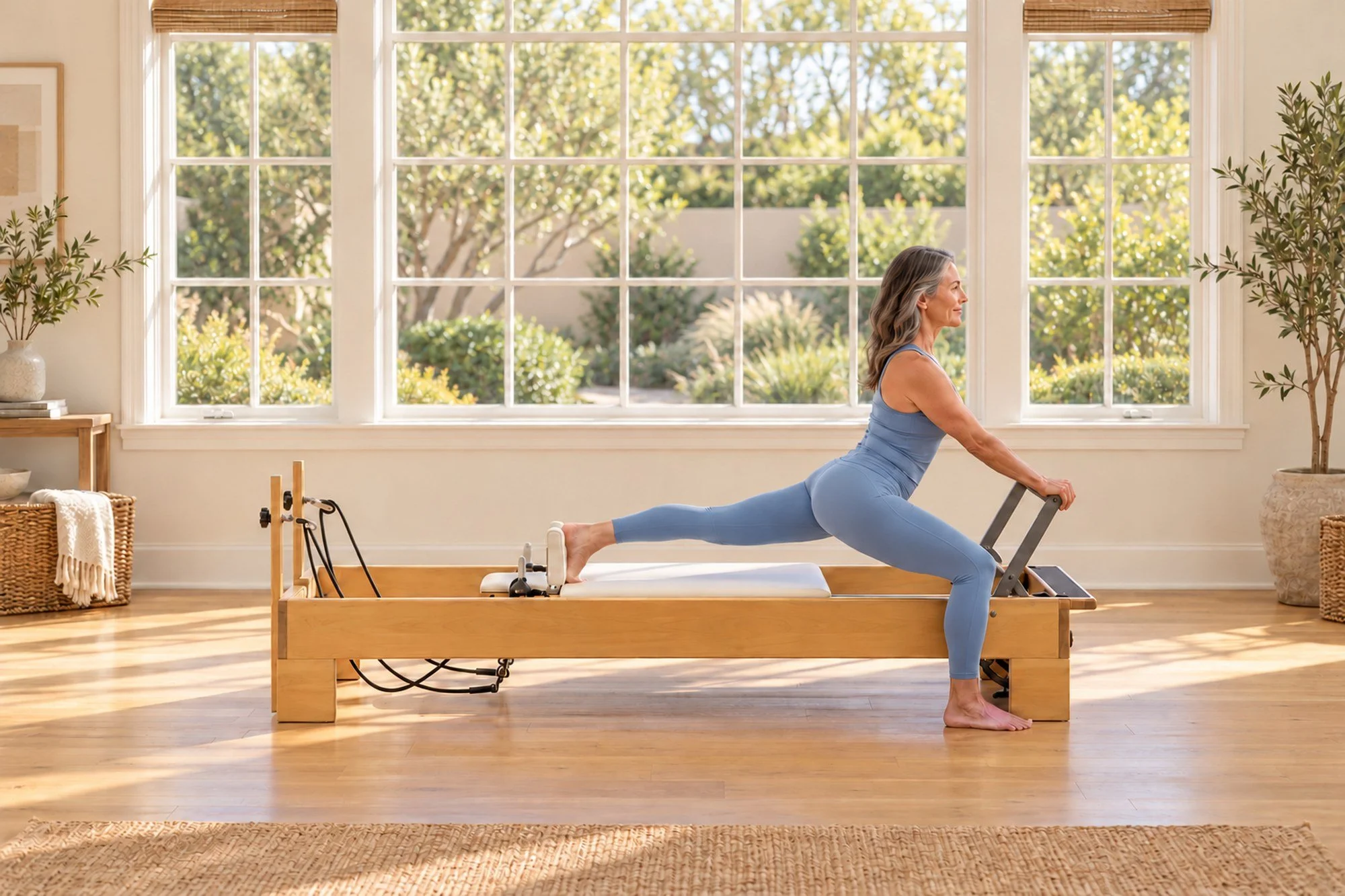
Did you know that improving flexibility can actually slow down aging — no matter your age? If you’ve noticed it’s harder to sit on a low couch, bend to tie your shoes, or wake up without stiffness in your back, you’re not alone. Losing flexibility is one of the first changes many women notice with age — but the good news is, you can improve it at any age.
Maybe you’ve also noticed rounded shoulders, difficulty touching your toes, or more stiffness in your hips and knees. These everyday challenges are more than just “normal aging.” They’re signals from your body that your flexibility is declining — and it’s time to act.
Why Flexibility Declines With Age
As we get older, muscles and connective tissues naturally become stiffer and shorter. Without regular movement and stretching, this process accelerates, limiting mobility and making even simple activities more difficult.
Struggling to reach overhead shelves?
Needing help to get in and out of a wetsuit?
Noticing balance issues or an increased risk of falls?
These are more than just nuisances. Reduced flexibility can create a self-perpetuating cycle: stiffness limits activity, which causes further stiffness and joint strain. Left unchecked, this speeds up the visible and physical signs of aging.
Why Flexibility Matters for Healthy Aging
The more you move in midlife and beyond, the more you keep of the strength, balance, and range of motion that everyday life depends on.
Staying flexible and strong keeps everyday movement easy.
Ignoring flexibility lets stiffness, weakness, and frailty build.
Stretching Benefits for Longevity
Stretching offers far more than increased range of motion. Regular stretching can help you:
Improve posture and mobility
Reduce stiffness, back pain, and joint discomfort
Increase balance and lower fall risk
Support healthy muscles and joints long-term
As Dr. Arnold Nelson, a kinesiology researcher at Louisiana State University, put it: “Stretching appears to do more than just increase range of motion."
How to Regain Flexibility After 40
The best time to start improving flexibility is now — whether you’re in your 40s, 50s, 60s, or beyond. Working with a physical therapist or movement specialist can help you create a safe, personalized stretching plan that fits your body and lifestyle.
A well-rounded flexibility program should target:
Hamstrings and calves
Hip flexors and quadriceps
Shoulders, chest, and back
Neck and spine
Four Stretches to Start With
Stretch to a gentle pull, never to pain.
Hamstrings: Lie on your back with a strap or towel around one foot. Keep the knee softly straight and raise the leg until you feel a stretch along the back of the thigh. Hold for 20–30 seconds, then switch sides.
Hip flexors: Kneel on one knee with the other foot flat in front of you. Tuck your tailbone slightly and shift your weight forward until you feel a stretch at the front of the kneeling-side hip. Hold for 20–30 seconds, then switch sides.
Chest and shoulders: Stand in a doorway with your forearms on the frame at shoulder height. Step one foot forward until you feel a stretch across your chest. Hold for 20–30 seconds.
Spine: On your hands and knees, inhale, arch your back upward (Cat). Exhale, drop your belly and lift your head and chest (Cow). Repeat slowly 5–8 times.
Stretching 3–4 times per week (or daily) can noticeably improve mobility and how young your body feels.
Types of Stretching: Dynamic vs. Static
Dynamic Stretching: Best before activity, this involves moving a joint repeatedly through its range of motion to warm up muscles and increase circulation.
Static Stretching: Best after activity or once muscles are warmed up, this involves holding a stretch for 10–30 seconds to lengthen the tissue and improve long-term flexibility.
⚠️ Tip: Never bounce during static stretches — it can cause injury.
Stretching for Life: Pilates, Yoga, and Beyond
Flexibility isn’t just about touching your toes — it’s about living a youthful, independent life. Disciplines like Pilates, yoga, and Tai Chi combine strength and flexibility training, helping you:
Move with ease
Prevent injuries
Stay strong and steady on your feet
Feel confident in your body
Even 15 minutes a day of stretching can make a real difference.
Final Takeaway
Maintaining flexibility is one of the simplest ways to keep your body moving well as you age. By adding stretching, Pilates, or yoga to your routine, you can feel and move younger — regardless of your age.
💡 Remember: strength + flexibility = a more youthful body.
If you've been told Pilates would help but haven't started, our guide, You Were Told Pilates Would Help. Read This Before You Start. is a good first step.
If you live in or near North County San Diego, start with a Pilates Intro Session, where we take you through the Revive Movement Screen™ and show you how Pilates can be adapted for your body.
If pain or a specific condition is what's holding you back, start with a Discovery Visit instead: one 60-minute session with a women's health specialist and a plan built for the body you have now.
No referral needed. No pressure — just answers and a plan.