

Pelvic Organ Prolapse Physical Therapy · Encinitas, CA
You Were Told 'Just Live With It' or 'Wait Until You Need Surgery.' Neither One Felt Like Care. That Ends Here.
Pelvic organ prolapse physical therapy for women over 40 in Encinitas, CA.
Specialized conservative care that rebuilds support, restores function, and gives you back the body you've been bargaining with.
Start With a Discovery Visit →
No referral needed. No pressure — just answers and a plan.
Dr. Dawn Andalon, DPT · Creator of the Pelvic & Core Reset™ Method · Practicing in North County since 2016
You stopped lifting to be safe. Dr. Dawn on how we find out what you can actually do.
01
Root-Cause Care, Not
Symptom Management
02
Every Specialist Personally
Trained by Dr. Dawn in the
Pelvic & Core Reset™ Method
03
Integrated PT & Therapeutic
Pilates — The Only Practice of
Its Kind in North County
Maybe you felt something was off and finally looked it up — and what you read frightened you. Maybe you saw a doctor who told you that surgery might be the eventual answer. Maybe you were told to do Kegels, avoid heavy lifting, and come back in a year. You left that appointment with a diagnosis and almost no path forward.
And yet here you are — modifying every workout, thinking twice before you pick anything up, afraid of what certain movements might make worse. Wondering whether this feeling of pressure, heaviness, or something being out of place is something you're just going to have to learn to live with.
You Have Been Living Carefully. Avoiding the Trampoline, the Heavy Lifting, the Workout Class. Managing Instead of Living. And You Are Exhausted by It.
If this sounds like you…
- — You feel a heaviness or pressure in your pelvis that is always there — and by the end of the day it is all you can think about
- — You skip the exercise classes you used to love because you are not sure what is safe anymore and you are too embarrassed to ask
- — You feel like something is falling out — and you have never said that out loud to anyone because it sounds terrifying
- — You have rearranged your whole life around what your body can and cannot handle — and it makes you quietly furious
- — A doctor told you surgery might be in your future and you have been carrying that information like a weight ever since
- — You do Kegels because someone told you to but you have no idea if they are helping — or even if you are doing them correctly
- — The symptoms got significantly worse during perimenopause or menopause and nobody explained why
- — You want your active life back but you are terrified of doing something that will make this worse
We are here to tell you — surgery is not the only path. And for many women, it does not need to be the next one.



What Waiting Costs
Nobody Drew You a Line. So You Drew One, and It Keeps Moving Inward.
It never arrives as a decision. You do not sit down one day and give up the heavy thing, or the class, or the trip you would have said yes to. You put one down because you were not sure, and nothing ever came along to tell you it was safe to pick it back up. So it stayed down. Then the next one did.
Here is the part nobody explains. A list built that way only grows. Nothing takes items off it, because nothing ever tests them. And at some point the rules stop feeling like decisions you made and start feeling like the shape of your life — which is the moment they stop getting questioned at all, including by you.
That matters most for the decision you are actually weighing. You have been handed a diagnosis, a pamphlet about Kegels, and a surgical conversation somewhere in your future — and you are being asked to think about all of it from inside a life you deliberately made smaller to protect yourself. You have never seen what your body does with proper, supervised loading. That is not a small gap in the information. It is the whole picture.
Who You'll Be Working With
You Have Been Told to Be Careful With Your Body. Here, Someone Is With You While You Test It.
You will work one-on-one with a women's health specialist for a full hour, and in most cases it will be the same person from visit to visit. Some programs involve more than one — a physical therapist and a Pilates specialist, or a physical therapist and an assistant — because that is what your plan calls for.
Every specialist here was trained by Dr. Dawn Andalon, DPT, in the Pelvic & Core Reset™ Method — twenty-two years of women's health practice behind every hand that works on you — and the team meets about every client. So on the week someone is away, the person you are with already knows your history, your plan, and exactly where you left off. Your care does not pause, and it never restarts.
That matters more here than almost anywhere. Finding out where your line actually is takes someone in the room watching how your body responds when you load it. It is not a conversation you can have with a pamphlet.


What Nobody Explained
Prolapse Responds to Treatment.
Most Women Are Never Told That.
Pelvic organ prolapse occurs when the pelvic floor muscles and supportive tissues can no longer hold the pelvic organs in their correct position. It is far more common than most women realize.
The pelvic floor is a muscle system — and muscles respond to treatment
The pelvic floor is not a passive structure. It is an active system of muscles, connective tissues, and ligaments that can be assessed, retrained, and strengthened. When pelvic floor function is restored through specialized physical therapy — hands-on manual therapy, neuromuscular retraining, and targeted therapeutic Pilates — many women experience a significant reduction in prolapse symptoms, improved pelvic support, and a return to activities they had given up. This is not a temporary fix. It is a genuine physiological change in how your body functions.
Hormonal changes directly affect pelvic support
Estrogen plays a critical role in maintaining the strength, elasticity, and integrity of the connective tissues that support the pelvic organs. As estrogen declines during perimenopause and menopause, these tissues become less resilient and pelvic organ support weakens. It is why so many women notice their prolapse symptoms becoming more prominent during and after the menopausal transition. It is not a coincidence. It is physiology — and it means that treating prolapse without understanding the hormonal context produces incomplete results. At Revive, we assess and account for where your body is hormonally as part of every evaluation.
Core function and uncoordinated pressure
One of the most consistently overlooked drivers of prolapse symptoms is the way pressure inside the abdomen is managed during movement. It is not the lifting, and it is not the exercise. It is what your breathing and your deep core muscles are doing while you do them. When the breath and the core are not working together — a pattern that develops gradually and often invisibly — pressure that should be shared across the whole system goes downward instead. Teaching your body to coordinate that pressure correctly is one of the most powerful things we can do for your symptoms, and it is something most clinics never address.
Finding out which of those three is driving your symptoms is what your first hour here is for. The Revive Movement Screen™ looks at how you load, how you breathe, and how you stabilize — core coordination, posture, and movement in the same exam, with a pelvic floor screen if needed. From there your plan is built on Dr. Dawn's Pelvic & Core Reset™ Method, which treats those structures as one system rather than a list of separate parts.
And because California is a direct-access state, you do not need a referral to get started.
Prolapse Looks Different for Every Woman. We Treat All of It.
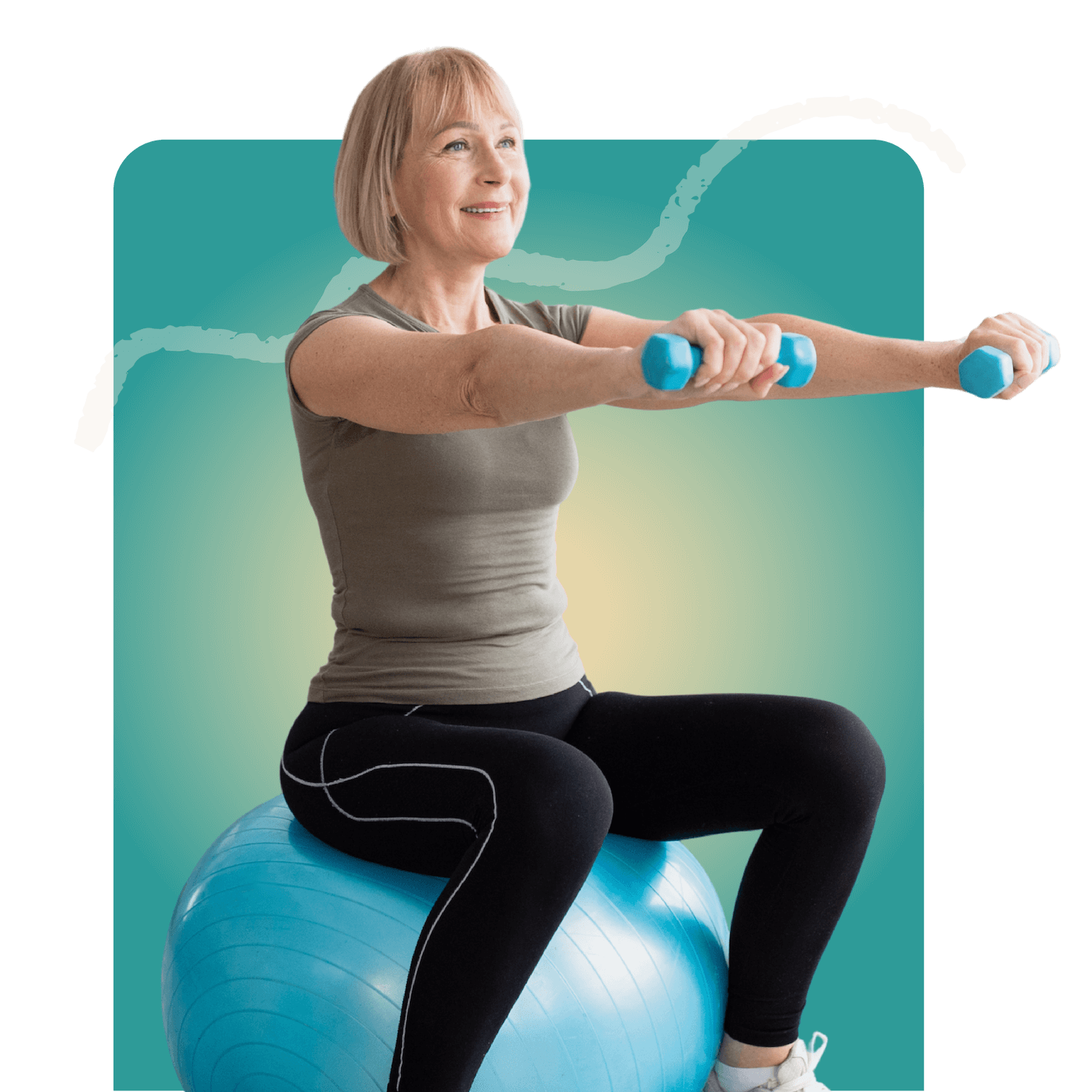
At Revive, we work with women across the full spectrum of pelvic organ prolapse — from mild prolapse that is causing significant symptoms to more advanced cases where conservative care is being pursued before or instead of surgery. If you are dealing with any of the following, we can help.
— Cystocele (bladder prolapse)
— Rectocele (rectal prolapse)
— Uterine prolapse
— Vault prolapse after hysterectomy
— Prolapse that has worsened during perimenopause or menopause
— Prolapse after childbirth or pelvic surgery
— You have been told surgery is your only option
— You have prolapse and want to get back to exercising safely
Not sure whether your specific symptoms are prolapse or something else? Your Discovery Visit is exactly where we figure that out together — clearly and honestly.
When you pay directly for your care, every decision is made for one person: you.
Revive is a private-pay practice. Most insurance-based clinics cap your sessions, run every patient through the same protocol, and discharge you on their timeline — not yours. That system runs on volume: more patients per day, shorter visits, protocols instead of plans. It is not that the people working in it do not care. It is that the model does not let them.
At Revive, we operate outside that system entirely. That means a care plan built around what is actually driving your prolapse symptoms, not what an insurance company will approve. That is the difference between treating a problem and unlocking a potential.
At a traditional insurance-based clinic
– Sessions are typically 30 minutes and often rushed
– You re-explain your history every visit, because there is no shared approach to your care
– Your discharge date is determined by your insurance, not your progress
– Treatment follows a standard protocol designed for the average patient
– Intra-abdominal pressure management and core coordination are rarely addressed
At Revive PT & Pilates
– Longer one-on-one sessions, never rushed, delivered by a team that knows your history
– Your care plan is built entirely around your body, your history, and your goals
– Treatment continues as long as you need it — no arbitrary end dates
– Every specialist is trained by Dr. Dawn in the Pelvic & Core Reset™ Method
– We integrate pelvic floor physical therapy and therapeutic Pilates for lasting results
If you have a PPO plan, we provide a superbill you can submit for possible out-of-network reimbursement. What comes back depends on your plan, so it is worth a quick call to your carrier.

What Starting Here Looks Like
A Clear Path Back to the Body You Can Trust Again
01
Start With a Discovery Visit
Your first step is a 60-minute, in-person visit at our Encinitas studio — a complete clinical evaluation with a women's health specialist that includes the Revive Movement Screen™, a pelvic floor screen if needed, and a postural analysis. You tell us what you have been experiencing, how long it has been going on, and what you want your life to look like. We listen. Then we tell you honestly whether we can help and exactly what that would look like — and you take home a written action plan.
02
We Begin the Work Together
From your very first session, you will work one-on-one with a women's health specialist — and because we meet as a team about every client, whoever you are with already knows your story and your plan from your Discovery Visit. No starting over. No repeating yourself. We move forward from exactly where the Discovery Visit left off, because prolapse symptoms almost never have a single cause and your plan is already built to address all of it.
03
We Build Your Program Around You
Based on your evaluation, our team builds a program designed specifically for your body, your history, and your goals. Your plan may include hands-on pelvic floor manual therapy, neuromuscular retraining, core coordination work, pressure management training, and therapeutic Pilates on the reformer — whatever combination is right for you. Every session moves you forward intentionally. Nothing is generic. Nothing is guesswork. Every decision is pointed at the same destination — the life you came here to reclaim.
Start With a Discovery Visit →
No referral needed. No pressure — just answers and a plan.

Proof
They Were Told to Live With It Too. Here Is What Changed.
4,700+
Women helped since 2016
45+
Years of combined team experience
★★★★★
4.9
Across 155+ Google reviews
★★★★★
Marisol, 52 — Pelvic Organ Prolapse
"I had quietly lived with prolapse symptoms for years because I assumed they were an unavoidable part of childbirth and aging. I stopped running, limited what I lifted, and constantly searched for a bathroom because I was also experiencing leakage. Revive was the first place where I felt comfortable discussing everything I was dealing with. I learned that I wasn't broken and that there were steps I could take. Today, I feel stronger, more supported, and much more in control of my body and my life."
★★★★★
Valerie, 57 — Pelvic Organ Prolapse
"Before coming to Revive, I planned my entire day around my prolapse symptoms. By afternoon, the pressure and discomfort were often so noticeable that I wanted to sit down and avoid going anywhere. I worried that surgery would be my only option and that my active life was slipping away. The team gave me practical strategies that helped while we worked on the underlying weakness. My symptoms are now much more manageable, and I can be on my feet, travel, and exercise with confidence again."
★★★★★
Denise, 62 — Pelvic Organ Prolapse
"The heaviness and pressure from my prolapse made me feel as though something was falling out of my body. I was scared to exercise, lift my grandchildren, or even take a long walk because I worried I would make it worse. I also felt embarrassed and didn't know who I could talk to about it. Revive helped me understand my condition and taught me how to move, breathe, and strengthen my body safely. I'm now walking, exercising, and enjoying my grandchildren again without prolapse controlling every decision."

100% Happiness Guaranteed
Yes, We Said It.
We are so confident in what we do and how we help women that our 100% happiness guarantee protects every program at Revive. If you are not 100% satisfied with the level of service you are provided, all you have to do is tell us that same day, and that session is on us. It's that simple.
Questions You May Have Before Starting Prolapse PT at Revive


-
Yes — and for many women it produces significant and lasting improvement. Pelvic floor physical therapy can reduce or eliminate prolapse symptoms, restore pelvic support function, and allow women to return to exercise and daily activities they had given up. How much improves depends on the type and stage of prolapse, your own anatomy, and consistency with the program. Your Discovery Visit is where we give you an honest assessment of what is achievable for your specific situation.
-
In most cases, yes. Many women who are told surgery is in their future find that their symptoms improve enough through physical therapy that surgery is postponed or reconsidered. Even for women who do eventually choose surgery, completing pelvic floor PT beforehand results in better surgical outcomes and faster recovery. There is very little downside to trying conservative care first, and the potential upside is significant. We will give you an honest assessment at your Discovery Visit of what we believe is realistic for your situation.
-
Yes. Working with Revive does not mean cancelling your surgical consultation or rejecting your doctor's recommendation. It means giving your body the chance to respond to conservative care first — and giving yourself the information you need to make a fully informed decision. Many women complete our program and decide surgery is not needed. Many complete our program and proceed with surgery better prepared. Both are good outcomes.
-
Yes — with the right guidance. Exercise is an important part of managing prolapse, particularly work that strengthens the pelvic floor and deep core without generating excessive downward pressure. What is not safe is returning to high-impact or heavy loading without first understanding how your body manages pressure and what your pelvic floor can currently handle. At Revive, we teach you exactly how to move, breathe, and exercise in a way that supports your pelvic floor rather than working against it — and where the line actually is for you.
-
Kegels, done correctly, are one component of pelvic floor rehabilitation. But they are not enough on their own for prolapse, and many women do them incorrectly without realizing it — which is why we assess how your pelvic floor is actually working before prescribing anything.
At Revive, every specialist is trained in Dr. Dawn Andalon's Pelvic & Core Reset™ Method — an approach developed over 22 years of women's health practice. The Revive Movement Screen™ looks at whether your pelvic floor is too tight, too weak, or poorly coordinated, and we design treatment around that specific finding. We also address intra-abdominal pressure management, core coordination, and movement patterns — the full system that supports your pelvic organs, not one muscle in isolation.
-
Estrogen plays a critical role in maintaining the strength and elasticity of the connective tissues that support your pelvic organs. As estrogen declines during perimenopause and menopause, these tissues become less resilient and pelvic organ support can weaken — which is why many women notice their prolapse symptoms becoming more prominent during this stage of life.
So the timing is not a coincidence. But the tissue change is only part of what is producing your symptoms. A great deal of it comes from how much downward pressure your daily activities are generating and whether your muscles are coordinating to manage it — how you lift, how you breathe, how you brace, what you do without thinking about it. That is where most of the symptom load actually comes from, and it is something that can be retrained.
Understanding the hormonal context changes how we design your program and what we prioritize. Many women who work with us during this transition experience significant symptom improvement even as hormone levels continue to change.
-
There is no other practice in North County San Diego that combines women's health physical therapy with therapeutic Pilates in one integrated program. And every client we work with is a woman over 40.
Every specialist on our team is trained in Dr. Dawn Andalon's Pelvic & Core Reset™ Method. We assess pelvic floor function, intra-abdominal pressure management, and core coordination as part of every prolapse evaluation — not pelvic floor strength in isolation.
Our sessions are one-on-one and unhurried, delivered by a team that knows your history. And because we are a private-pay practice, every decision we make is based on what your body needs — not what an insurance company will approve.
-
It depends on the type and stage of prolapse, your consistency with the home program, and how your body responds to treatment. Most women notice meaningful symptom improvement within 60 days. At your Discovery Visit we will give you a realistic timeline based on your specific situation — not a generic estimate.
-
Your first step is a Discovery Visit — a 60-minute, in-person visit at our Encinitas studio. It is a complete clinical evaluation with a women's health specialist that includes the Revive Movement Screen™, a pelvic floor screen if needed, and a postural analysis. You tell us what you have been experiencing, how long it has been going on, what you have been told elsewhere, and what you want your life to look like. We listen. Then we tell you honestly whether we can help and exactly what that would look like — and you take home a written action plan. There is no pressure and no commitment.
-
No referral is needed. California is a direct-access state. If your care plan benefits from working with your gynecologist, urogynecologist, or other specialist, we're always happy to collaborate with your existing care team — but you don't need to wait for anyone's permission to get started.
-
Revive PT & Pilates is a private-pay practice, which means we do not bill insurance or Medicare directly. Our private-pay model is what allows us to provide longer, more personalized one-on-one sessions without the restrictions that come with insurance-based care. Every decision we make is based on what your body needs — not what an insurance company will approve.
Medicare does not cover the services we provide, so there is nothing for Medicare to reimburse. We do not provide superbills to Medicare beneficiaries, including Medicare Advantage plans.
We are out-of-network for PPO plans on our physical therapy services. If you have a PPO plan, we provide a superbill you can submit for possible out-of-network reimbursement. What comes back depends on your plan, so it is worth a quick call to your carrier.
If you have questions about fees, call or text us at (760) 301-5235 and we will walk you through everything.
For the full picture — including HSA and FSA, and exactly what to ask your insurance company — see our Cost & Insurance page.
Other Conditions We Treat
If Something Else Is Going On Too, We Treat That Here as Well.
Urinary Incontinence
If the main thing you notice is leaking rather than pressure or heaviness, that is usually stress incontinence.
Hysterectomy Recovery
Rebuilding your core and pelvic floor after surgery, at the right pace.
Menopause & Perimenopause
A body changing on its own schedule, and nobody explaining what to do about it.
Osteoporosis & Bone Density Loss
Building strength safely when you have been told to be careful.
Five Questions to Ask About Your Prolapse: Before You Decide Between a Pessary, Surgery, or Waiting.
GET THE guide


You were given a diagnosis and two options — a pessary, or surgery. Not much to go on for either. Dr. Dawn Andalon walks you through the five questions to ask before you choose between them: what a stage actually tells you, what caused it, and what specialty physical therapy can actually do. Answers, not exercises.

One Studio in Encinitas. Women Drive Here from Across North County.
Revive PT & Pilates is a single studio in Encinitas, CA, in the heart of North County San Diego. Women drive to us from across the county — Carlsbad, Solana Beach, Del Mar, La Jolla, Leucadia, Cardiff by the Sea, Rancho Santa Fe, and Oceanside — for pelvic floor physical therapy and therapeutic Pilates.
Visit us at 681 Encinitas Blvd, Encinitas, CA 92024. Free parking is available directly in front of the building. Physical therapy and integrated Pilates sessions take place in Suite 308; Pilates group classes are in our adjacent studio, Suite 305. When you arrive, look for Suite 308 — our team will direct you from there.
No referral is needed — California is a direct-access state.
If you’re traveling from further in San Diego County and want to confirm we’re the right fit before making the drive, call or text us first at (760) 301-5235 — we’re happy to answer your questions.

You Have Waited Long Enough
Nobody Here Is Waiting for It to Get Bad Enough.
The change is not that you become more careful. It is that careful stops being the first thing you think about. You lift the laundry basket. You say yes to the class. You hike the trail. Your body stops being something you manage around and goes back to being something you live in.
The women who complete this program tell us they stopped waiting for the surgical conversation. That is what is available on the other side of a Discovery Visit, and it starts with one honest hour in our studio.
Most women tell us it was the first time they ever felt truly listened to.
Start With a Discovery Visit →
No referral needed. No pressure — just answers and a plan.