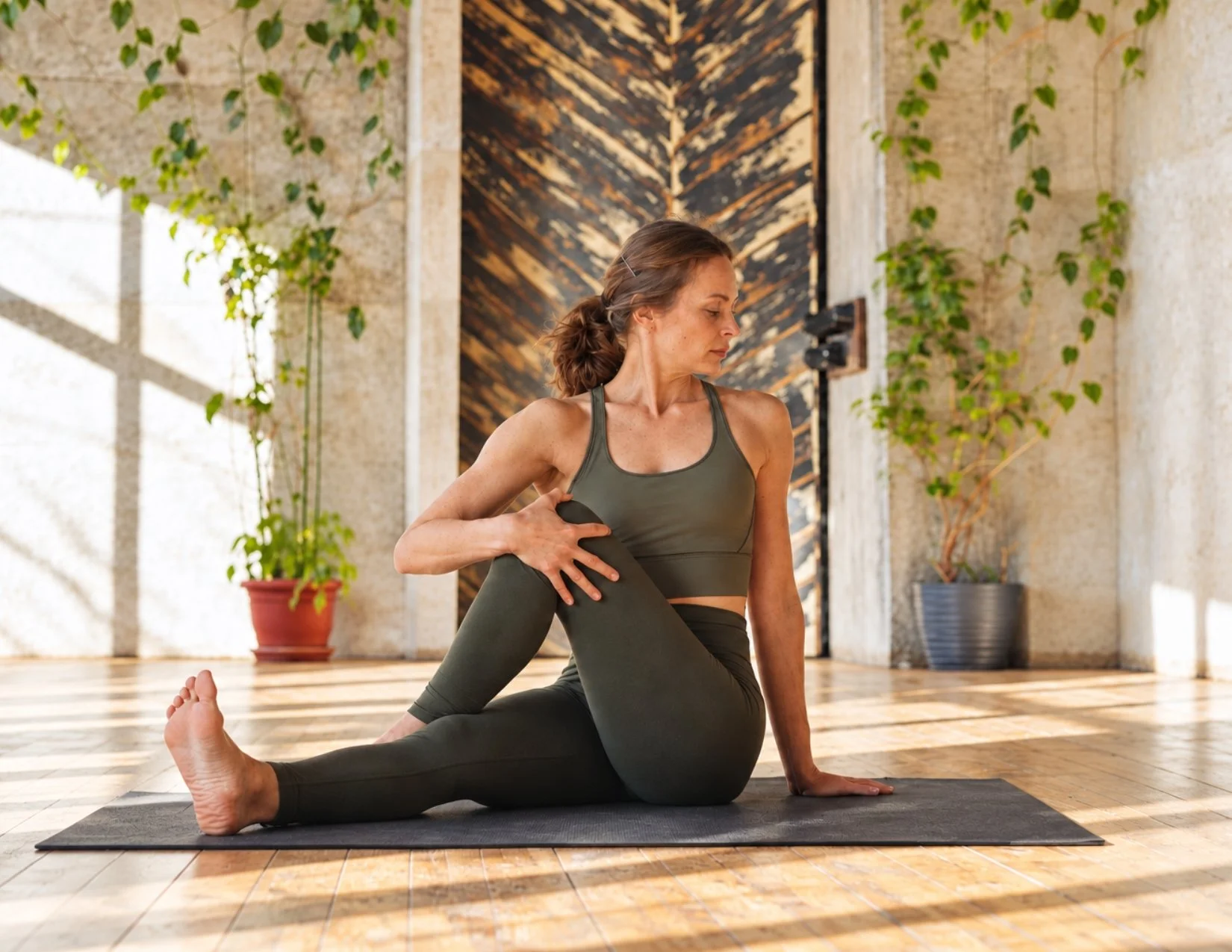
One of the most common questions we hear at Revive PT & Pilates is:
“Why does cracking or popping my back make me feel better—but lately it doesn’t seem to help at all?”
A client of ours shared:
“I have recently gotten into the habit of cracking my back whenever I feel stiff or sore. At first, it gave me relief, but now that relief doesn’t last very long—sometimes not at all. Why is that happening?”
This is such an important question, because many people use cracking or popping as a quick fix for back pain without realizing what’s actually going on inside the body.
What Actually Happens When You “Crack” Your Back
The joints in your spine are no different from the joints in your fingers, hips, or knees. They all:
Have cartilage
Contain fluid
Are surrounded by a joint capsule
Inside that capsule is joint fluid, which has gases like nitrogen dissolved in it. When you stretch the joint quickly, the pressure inside drops and a small gas bubble forms. That's the "pop" you hear.
Think of it like opening a bottle of champagne. The cork pops, the bubbles fizz up, and the pressure is released. That’s essentially what happens in your joints when you crack your back.
Why Does Cracking Your Back Provide Relief?
That temporary relief likely comes from mechanoreceptors, tiny nerve endings inside your joints. These receptors send signals to your brain that can briefly "override" pain signals.
In other words: cracking your back tricks your nervous system into turning down pain—but it doesn’t solve the root cause. That’s why the relief is only temporary, and over time, it often stops working.
The Real Cause of Back Stiffness and Pain
When we evaluated this client, we found the real problem wasn’t in her joints at all—it was in the muscles and posture supporting her spine.
Weakness in the muscles of the back and hips
Postural imbalances
Habits like prolonged sitting and leaning forward
These underlying issues were the true cause of her stiffness. Once we identified them, we created a plan that included:
Posture education
Specific strengthening exercises for her back and hips
A customized home exercise program
Within about a month, her pain had eased considerably, the urge to crack her back had faded, and she was back to her favorite activities.
Should You Stop Cracking Your Back?
While an occasional pop isn't necessarily harmful, relying on it as your main "treatment" for back pain is not a long-term solution. Many people find the relief gets shorter the more they rely on it.
If you’re constantly feeling the urge to crack your back, it’s usually a sign that something deeper—like muscle weakness, poor posture, or mobility restrictions—needs to be addressed.
What to Do Instead of Cracking Your Back
When you feel the urge to crack, try giving your back the movement it's asking for, without forcing it. These three are gentle enough to do every day.
Cat-Cow. Begin on all fours, hands under shoulders and knees under hips. Inhale, arch your back upward (Cat). Exhale, drop your belly and lift your head and chest (Cow). Move slowly through 10 rounds.
Open book. Lie on your side with your knees bent and stacked and both arms straight out in front of you. Keeping your knees together, slowly open your top arm up and across to the other side, letting your chest and head follow, then return. Repeat 5 to 8 times on each side.
Pelvic tilts. Lie on your back with knees bent and feet flat on the floor. Inhale, then exhale as you press your low back into the floor. Hold for 5 seconds, then slowly release. Repeat 10 times.
You'll find more gentle exercises like these in our post 5 Pilates Exercises That Can Help With Your Pelvic Floor. They keep your spine moving between visits, but they don't replace finding out why your back keeps stiffening.
When to Get Your Back Checked
See a professional if your stiffness comes with any of these:
Pain, numbness, or tingling that travels down your leg
Weakness in your leg or foot
Back pain that started after a fall or injury
Pain that wakes you at night or keeps getting worse
Stiffness that hasn't eased after a few weeks of gentle movement
Go to an emergency department right away if you suddenly can't control your bladder or bowels, or lose feeling in your groin.
Wondering whether you need a scan? Our post Do I Need An X-ray or MRI For My Back Pain? explains when imaging helps and when it doesn't.
What to Do Next
If you're struggling with back stiffness, pain, or the habit of cracking your back, you don't have to live with it. A proper evaluation can uncover the real reason behind your discomfort.
If back stiffness keeps coming back, our guide What Your Imaging Could Not See explains why the real cause of back pain often doesn't show up on an X-ray or MRI.
If you live in or near North County San Diego, start with a Discovery Visit: one 60-minute session with a women's health specialist at our Encinitas studio, and you walk out with a plan built for the body you have now.
No referral needed. No pressure — just answers and a plan.
Source: Kawchuk GN et al., "Real-Time Visualization of Joint Cavitation," PLOS ONE, 2015.